Lessons Learned: What Being On The Forbes 30 Under 30 List Actually Taught Me

Let me take you back to 2016. The whole "2016" trend going around on Instagram where people posted throwbacks and reflections on where they were exactly ten years ago, triggered a reflection process of my own. There is one date in particular that has a very special meaning to me: 19 January 2016.
The morning that changed how people saw me
A week or so earlier, I had received an invitation to come to London for the launch party of the very first Forbes 30 Under 30 Europe list. The email told me I was a semifinalist, sworn to secrecy, and that the full list would go live on the morning of 19 January.
So that's what happened: On the morning of 19 January, I opened the browser on my phone, checked the Forbes website, and there it was: the Forbes 30 Under 30 Europe list, with my name on it.
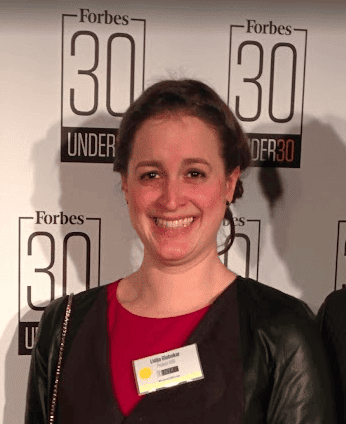
The photo from the launch event (see below) in London captures exactly how I felt that day: surreal. I didn't really understand how I had ended up there, and if I'm honest, the impostor syndrome hit hard. "Do I really deserve this? Did they make a mistake? Who picked all these people, and do they even know what they're talking about?". Just a few of the very loud thoughts running through my head that day.
Living up to a headline
Forbes had shared a draft press release we could use for our own circulation. It described the Policy Class of 2016 as “young people championing Europeans' rights and their political movements". Reading that sentence back now gives me a bit of an ick, honestly. But there I was, standing in London among the other winners on that list, suddenly holding a title I wasn't sure I had earned.
Once I was back in Brussels, something shifted. I felt like I now had to prove myself, to actually live up to that big, dramatic sentence about "championing rights". I won't pretend it didn't motivate me at the same time. It made me proud of what my team and I had built together. But whether it was enough to land me on that list wasn't for me to decide. There was an entire panel of judges for that. 🙂
What the photos never showed
Here's the part that never made it into any press release: at the time, I was struggling. I had a part-time job because I wanted to dedicate most of my time to my NGO, where I worked as an unpaid volunteer. I knew a bigger income was going to become necessary sooner rather than later. And yet, at the same time, I loved what we were building. I deeply believed in our cause, and I didn't mind putting in the hours.
This illustrates a topic I keep coming back to on this blog as well: ambiguity. Two things can be true at once. You can be proud and exhausted. Recognised and unpaid. Thriving and struggling. Simply put, life rarely hands you one clean feeling at a time.
In the years that followed, people would sometimes introduce me at parties with "this is Lidija, she's on the Forbes 30 Under 30 list." And once, a colleague asked me, half joking, "What are you actually doing here? Haven't you been on the Forbes list?" Both moments left me a little awkward and unsure how to respond. A title, it turns out, can follow you around in ways you didn't sign up for.
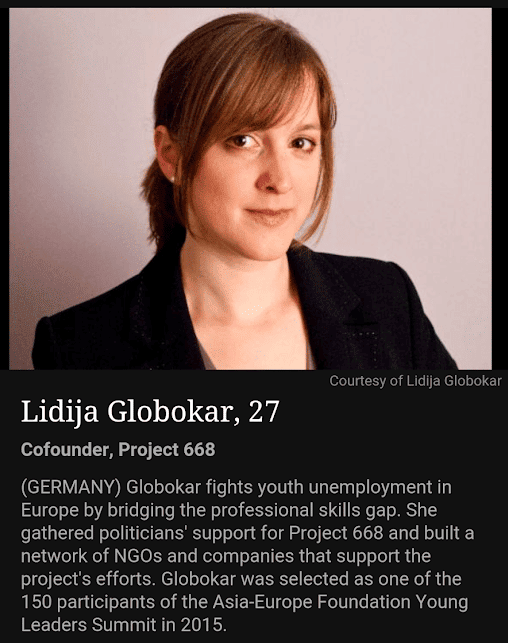
At the end of 2017, I left Project 668, the NGO I had poured six years of volunteer work into. It felt like the right moment to hand the leadership over to a new team. To me, it truly felt like the end of a chapter. 🙏
The guilt nobody tells you about
For a long time after that, I carried a quiet guilt. I had the sense that I hadn't "made enough" of being on that list, that I hadn't used it strategically enough, and that maybe I was simply too young at the time to know how. On top of that, I was disappointed that it hadn't helped our organisation reach the next level. The funding never came. The social enterprise never materialised. It took me years to properly grieve that and to stop making it mean something about my own worth.
Fast forward ten years
Looking back now, the most beautiful part of that whole chapter wasn't the Forbes list at all. It was Project 668 itself. Collaborating with other NGOs, helping young people find their footing in the job market, being surrounded by people who shared the same values. Money can't buy that kind of belonging, and no headline or title can replace it either.
Why this matters beyond my own story
If there's one thing I hope you take from this, it's that recognition and fulfilment don't always show up in the same package. Sometimes the achievement that looks impressive from the outside isn't the thing that nourishes you; and the quiet, unglamorous work in the background is. It's worth asking yourself, every once in a while, which one you've been chasing and to change course accordingly (you have the right to change directions!).
My wish for you is that you find and experience genuine fulfilment, whether it lasts a moment, a few years, or a lifetime. It might show up at work, in your free time, with your family, your friends, or your neighbours. You deserve those moments of being fully yourself, filled with joy, purpose, and love. Cherish them and try to remember them when impostor syndrome and all these critical voices show up. They are there to remind you that you are perfect the way you are, and that you have everything you need to live a fulfilling life, on your own terms.
Sending love, Lidija ✨